

Over the holiday break, I watched far more Instagram and TikTok reels than I care to admit. A few days before Christmas, videos of upset pre-teens throwing gifts across the room, or even stomping on them, kept popping up on my feed. And I kept watching.
And kept wondering….
- Why does the parent keep filming once the moment has clearly escalated into a “bad look” for the child?
I remember my own share of disappointing Christmas moments. Let’s just say my mother’s fashion sense was not always aligned with mine. I can still picture the potato-sack mini skirt I received in sixth grade. ( I “accidentally” spilled nail polish on it a few days after Christmas. 😁)
What I remember most as I unfolded the unusual garment was that I didn’t want my mom to feel bad. She was so excited! (But apparently not excited enough to buy herself a potato-sack skirt. lol.)
I really didn’t want her to feel bad
I really didn’t want her to feel bad
I REALLY didn’t want her to feel bad
(Okay I’ll stop.)

Do children still care about their parents’ feelings?
As a little girl on Christmas mornings…
*I tried really hard not to show my disappointment so I wouldn’thijack the joy around me.
*I prepared myself for the possibility of disappointment based on previous years.
*My friends and I jumped on the phone to talk about our favorite gifts, AND our disappointments.
As a high school and college athlete,..
*I tried really hard not to show my disappointment in my personal performance so I wouldn’t hijack the joy of a team victory.
*I prepared myself for the possibility of disappointment based on scouting reports and film.
*My teammates and I, along with friends who played other sports, talked openly about games we lost, games we didn’t play, and games we did poorly.
And now, as a parent,..
*I try really hard not to show my disappointment from work so I don’t hijack the joy my children want to share about their day.
*I prepare myself………
well, you get the idea!
- Consider others’ feelings
- Prepare for things not going your way
- Pause and then process the disappointments in safe validated spaces.
Moments under the tree and on the soccer field are not insignificant. They prepare us for much bigger disappointments in life that far outweigh receiving the wrong gaming system.
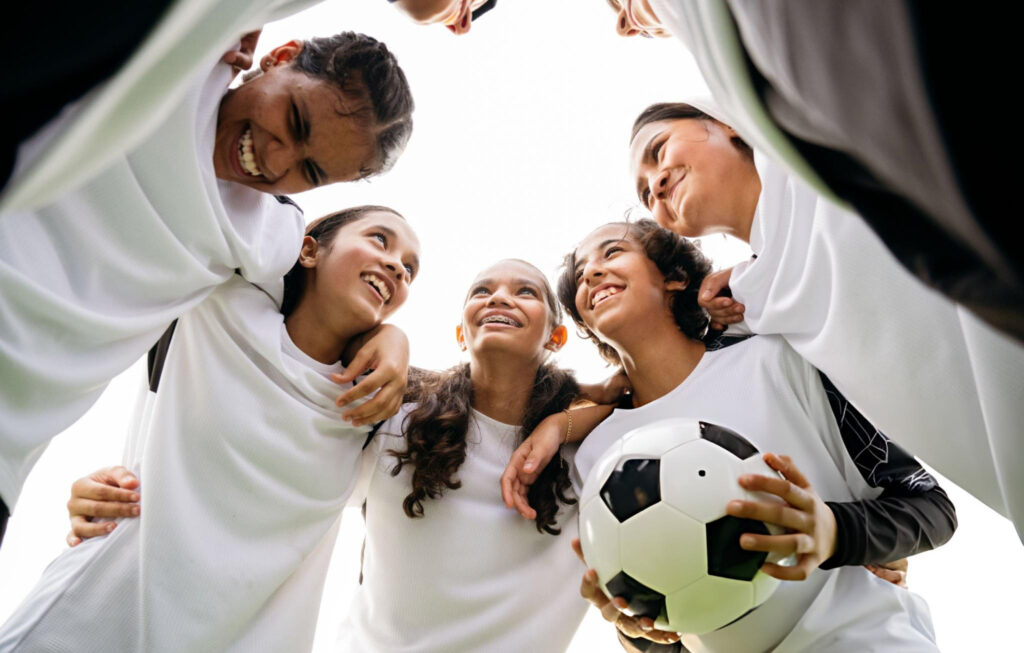
Sports should remain one of the most psychologically safe places for young people to learn how to handle disappointment.
But when parents struggle to tolerate disappointment themselves, or carry fear from their own child’s disappointments, they often unintentionally hijack the very learning moments their children need to build this muscle of resilience.
A healthy Sports culture also teaches timing, emotional regulation, and emotional agility. There is a moment when you must collect yourself just enough to shake hands with your opponent and make it to the locker room before letting it all out.
Lastly, Sports should provide validation and a healthy perspective about disappointment; something social media rarely offers. Online, kids see highlight reels and mostly celebrations of their peers, causing them to believe they are the only ones who experience disappointment
I worry we are living in a time when children are responding poorly to disappointment, Parents & leaders are actively avoiding it, or suppressing it in isolation… or “filming it!”
At Agility Counseling Group, we specialize in teaching emotional agility in the face of disappointment—for athletes, parents, leaders, and teams.
If this resonates, we’d love to connect. [email protected]